
01 / 12Protocols

Onchain systems that survive contact with money.

The money moving part of your product, built to hold up when it is carrying real value on Solana or the EVM. We design it, prove it, attack it ourselves, and only then put it in front of your users.

Story · Try to break it

In a good money system, cheating never pays.

  1. People put money in.

    Users deposit funds. The protocol keeps them safe and pays out only by its rules.

  2. Someone will try to cheat.

    Anything that holds money attracts attackers. What matters is how much cheating costs them.

  3. Cheaters lose their deposit.

    Everyone who takes part locks a deposit first. Get caught cheating and the deposit is gone.

  4. Now try to break it.

    Raise the money inside. A fixed deposit gives way at some point. A deposit that grows with it never does.

Jean BaudrillardLa Disparition Du Monde Réel

Design the mechanism

We start with the incentive, not the framework. Before a line of code exists we write down what every party gains, what every party risks, and what it costs them to cheat. That turns an idea into a design you can argue with on paper, where changing your mind is free. It is the cheapest hour you will spend on the whole build.

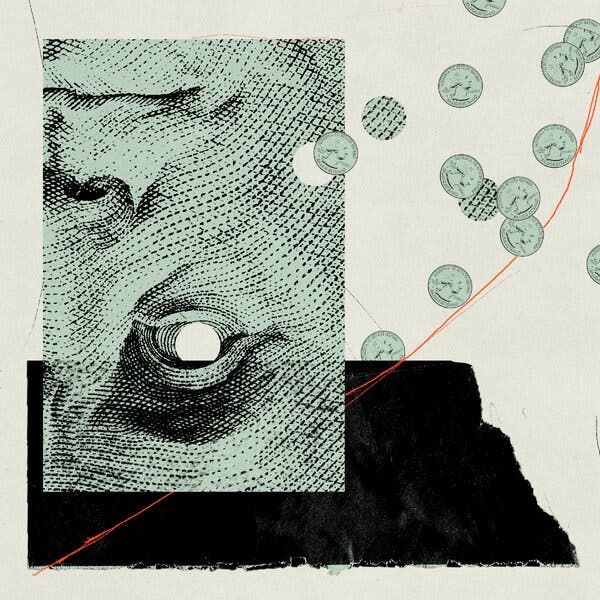
A collage of an engraved banknote portrait, falling coins and a rising curve

Prove the economics

Your numbers should not rest on somebody’s gut. We run the system against an attacker thousands of times until we find the point where breaking it costs more than it pays, then set the deposits, fees and penalties so that point rises as the value inside grows. You get the number and the evidence behind it.

Launch checklistPreparingLive
Checks passed0 / 4
Code reviewed and tested
Security audit passed
Monitoring and alerts on
Rollback ready in one step
0days liveNo incidents

Ship to mainnet

Launch day is the easy part. What we hand over is the live system plus everything that keeps it alive: the monitoring, the release process, the key rotation and the runbooks your own engineers follow at three in the morning. No hidden dependency on us.

Markets

Market making and real world assets, with the compliance work done first.

Advisory on the parts that decide whether a desk or a tokenised asset can go live, and the engineering that makes the answer provable.

01

Venue and inventory policy

Quoting rules, inventory limits and the kill switch, written down before capital moves.

02

Attestation and reporting

Signed proofs and reports a regulated counterparty will accept without a phone call.

03

Tokenisation review

Collateral, redemption and disclosure paths reviewed against the chain you plan to use.

04

Counterparty diligence

Screening, restricted party checks and the audit trail that proves you ran them.

RWA· Demo surface
$1,227.59−23.07%
$3,142$2,094$1,047$0
16 May19 May22 May26 May29 May01 Jun

Demo data, seeded and deterministic

Questions

Questions about protocols

  • Solana is where our deepest work sits, built in Rust and Anchor: programs, indexers, keepers and the console that watches them. On the EVM side, one contract set in Solidity carries across Ethereum, Arc, Base, Arbitrum, Optimism, Polygon and the other EVM networks without rewriting the mechanism, and we also build in Move on Sui. If your chain is not on the list, ask. The answer is usually yes when it runs Rust, Solidity or Move.

  • We start with the incentive, not the framework. Before any code exists we write down what every party gains, what it risks and what it costs to cheat, so the design can be argued with on paper. We run the system against an attacker thousands of times to find where breaking it costs more than it pays, and set deposits, fees and penalties so that point rises as the value inside grows. A fixed deposit eventually gives way, while one that grows with the value never does.

  • Users deposit funds and the protocol pays out only by its rules, such as a valid signature, an amount within the daily limit and a time lock that has passed. Everyone who takes part locks a deposit first, and a party caught cheating loses it, with an appeals route so anyone punished in error is made whole. The payment, escrow and payout rails check the rules before the money moves and keep the proof attached to the payment itself, with an audit row on every state change.

  • Yes, that is the normal end of a protocol engagement: programs, indexers, keepers and the console that operates them, with adversarial review before anyone deposits. We do not deploy an unaudited smart contract to a production network, and we say so before the engagement starts. You get the live system plus the monitoring, the release process, key rotation and the runbooks your own engineers follow. The code lands in your repository under your licence, keys are rotated to your team at handover and we keep no copy.

  • Yes. We advise on the parts that decide whether a desk or a tokenised asset can go live, with the compliance work done first, and we build the engineering that makes the answer provable. That covers quoting rules, inventory limits and the kill switch written down before capital moves, signed proofs and reports a regulated counterparty will accept, collateral, redemption and disclosure paths reviewed against the chain you plan to use, and counterparty screening with the audit trail that proves you ran it.

Start a project

Next page02 / 12AgentsSoftware that acts on its own, inside limits you set